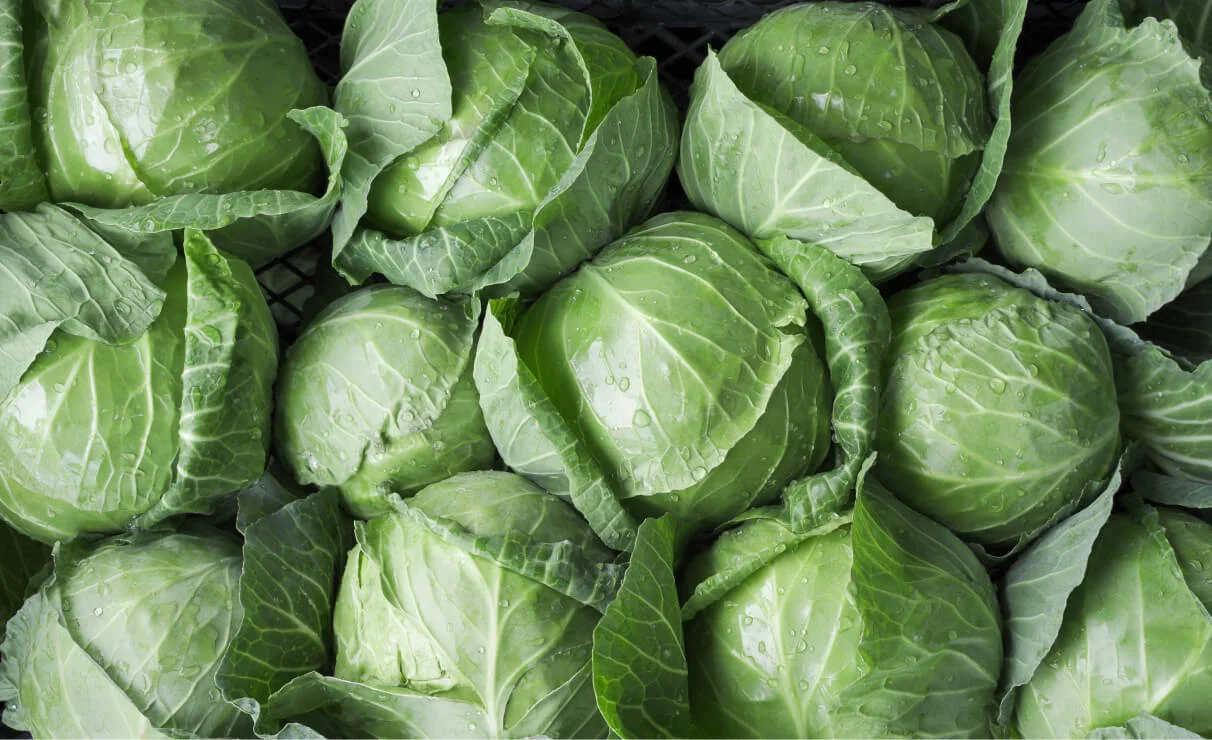
Cabbage is a biennial crop that is grown in colder climates. It is a nutrient-demanding plant by nature and is prone to infection by several bacteria, fungi, and other parasites. Seeing its vulnerability let’s understand what other aspects we need to consider before consumption.
Cabbage is a versatile vegetable that’s affordable, widely available, and easy to prepare. It is rich in antioxidants, vitamins, and compounds that inhibit and cleanse carcinogens. In addition, it makes for a great weight loss aid; it is supported by minerals that cleanse the digestive system, boost the immune system, lower serum cholesterol levels, etc.
In Ayurveda, understanding the real nature of the food and the effects it has on the basic systems of the body – Vata (system of activity), Pitta (system of warmth), and Kapha (system of stability) – is important.
Cabbage is known to increase Vata because of its dry nature and cold potency. To minimise Vata aggravation, chop the greens finely and cook well with Vata-pacifying spices and oils, and eat in moderation. Vatas are more susceptible to be put out of balance by raw foods. This makes it better for Pittas and Kaphas, particularly during late winter and spring. In its raw form, cabbage can be difficult to digest and can strongly provoke Vata. When fermented with vinegar, it can be very Pitta-vitiating. It is also goitrogenic, meaning it contains substances that can interfere with the functioning of the thyroid hormone, which also means it can lower thyroid function in people who have hypothyroidism.
Listening to your body is always the key. If eating greens gives you bloating or abdominal discomfort, this is a sure sign of increased Vata. Eating greens at lunch when digestion is the strongest along with some unctuous matter (oils), in cooked form can help give you the digestive edge, if you find your digestion is weaker. Also, to maximise its health benefits, increase your cabbage intake slowly and allow your body to adjust. Stay hydrated to avoid constipation.
Words to the wise
Since most greens have Vata increasing qualities (vulnerable in nature by growth itself), its ideal to eat them less or in moderation. If you plan to eat them, then it’s better in Pitta season (September–October) and Kapha season (March–April) accordingly, in cooked form only.
Talk to our doctors at CGH Earth Ayurveda – Kalari Kovilakom & Kalari Rasayana – for a better understanding of diet, how different foods affect our systems, and personalising a diet based on your doshas.