Why Real Healing Takes Time—And Why 14 Days Is Just the Beginning.
Deep Diagnosis, Personalisation, and Purification.
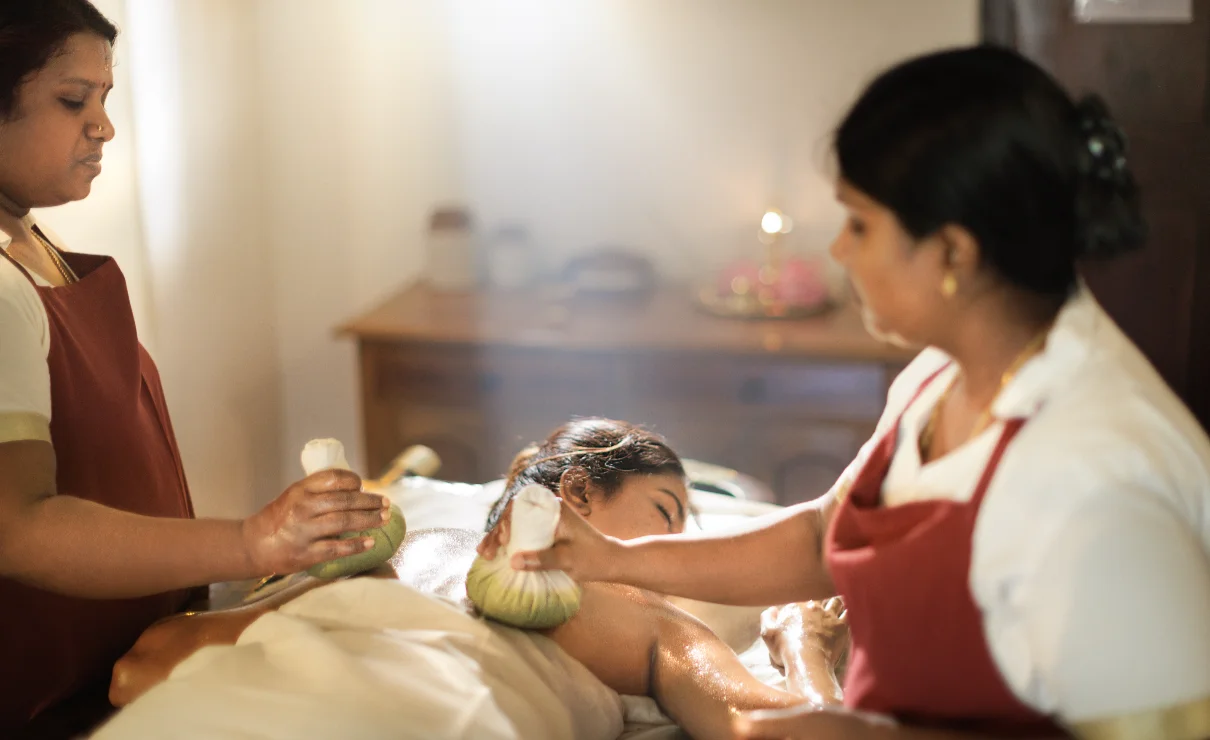
The initial days focus on a comprehensive understanding of the patient’s unique constitution (Prakriti), current imbalances (Vikriti), and lifestyle. This careful assessment forms the cornerstone for a fully personalised treatment plan. Panchakarma is not a single-day intervention; rather, it is carefully structured therapy composed of three essential phases:
- Pre-operative procedures (Purva Karma)
- Operative procedures (Pradhana Karma)
- Post-operative procedures (Paschat Karma)
Each stage builds upon the previous one to ensure holistic healing.
Rejuvenation & Rebuilding
After the detoxification phase, the body moves into nourishment and rejuvenation. This phase incorporates internal herbal medications, specialised therapeutic diets, and restorative practices such as yoga and meditation; all designed to rebuild vitality and promote lasting wellness.
Time for Transformation
Ayurveda embraces a holistic philosophy that targets the root cause rather than merely alleviating symptoms. A 14-day period is often considered the minimum to allow meaningful physical, emotional, and energetic transformations to unfold; changes that shorter programmes simply cannot accommodate. However, it is important to emphasise that Panchakarma treatment duration is highly individualised and cannot be rigidly standardised. Several factors influence the length of therapy, including:
- Body constitution (Prakriti)
- Nature, stage, and severity of the condition
- Age of the individual
- Chronicity of the illness
- Overall health and mental wellbeing
- Presence of associated symptoms
The Reason 14 Days is the Minimum and Why It Often Takes Longer.
The preliminary phase, which includes essential therapies like Rookshana (drying or reduction therapy) and Snehapana (internal oleation), followed by the principal elimination procedure, typically spans a minimum of 10 days. Subsequently, an additional 2 to 3 days are required for post-elimination care to facilitate recovery and stabilise the body after cleansing.
Thus, even the most basic and effective Panchakarma protocol demands at least 14 days to ensure treatments are administered safely, methodically, and in strict accordance with classical Ayurvedic principles.
In reality, many patients require longer durations due to the complex nature of their health issues. Chronic or deeply rooted imbalances often need extended care to:
- Complete thorough detoxification without compromising strength
-
Allow gradual rebuilding of tissues and energies
-
Address emotional and mental healing alongside physical recovery
-
Prevent relapse and consolidate long-term benefits
In such cases, a personalised plan often extends well beyond 14 days to support the body’s natural pace of healing and transformation.
NABH-accredited Protocols
Our treatment protocols are NABH-accredited, guaranteeing adherence to authentic, time-honoured Ayurvedic methods. This accreditation ensures the highest standards of safety, quality, and measurable therapeutic outcomes—standards that require appropriate treatment durations to be truly effective.
True Healing Takes Time
Unlike quick fixes or instant remedies, Ayurveda follows a thoughtful, phased process—preparation, cleansing, and rejuvenation—to restore deep, sustainable balance and wellness.
This is why our approach is deliberate, measured, and profoundly effective—because genuine healing is never rushed.
Talk to our doctors at CGH Earth Ayurveda – Kalari Kovilakom & Kalari Rasayana – to know how much time your body and mind will need for healing, and we will help you with a personalised plan that’s perfect for you.