OUR STORY

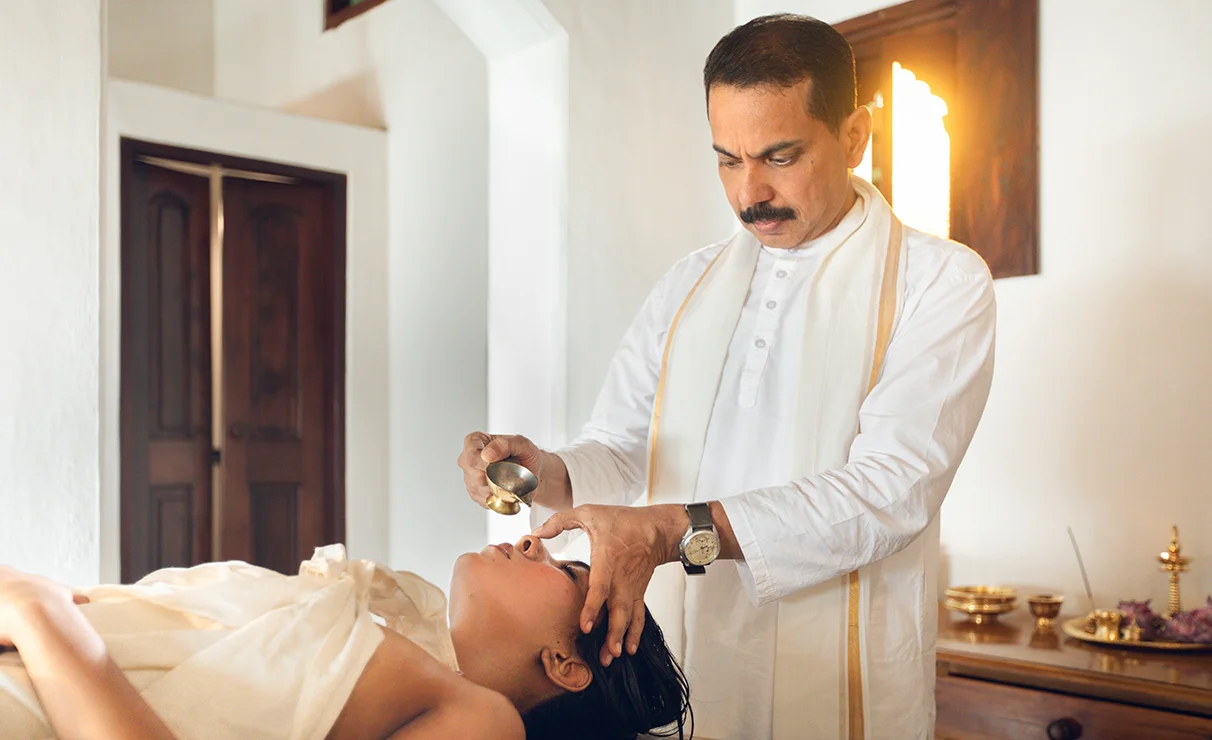
CGH Earth Ayurveda follows the strict tenets of traditional Ayurveda at our NABH-accredited hospitals in Kerala – Kalari Kovilakom & Kalari Rasayana – to treat the root cause of your ailments, not just the symptoms, by looking at all aspects of your being – mind, body, and soul. This holistic approach is strengthened by our specialists – doctors, therapists, nutritionists, yoga practitioners, chefs – who work as a team to craft an Ayurvedic lifestyle personalised for you. Whether you are just discovering Ayurveda or deepening an existing journey, this is an invitation to return to balance, vitality, and conscious living.

Welcome to a path where wellness is not a trend, but a timeless way of being, at CGH Earth Ayurveda.

Q&A: Understanding Ayurveda

Q&A: Understanding Ayurveda

1. Why do you think Ayurveda is still relevant today? How does Ayurveda converge or diverge from allopathic medicine?

Ayurveda is scientific and its principles are relevant to the modern world because it takes a holistic approach to health and personalises the treatment based on the individual, which makes it a complete medical system. Ayurvedic treatments and medicines empower our body to heal itself. Ayurveda unlocks our body’s healing power and acts as a catalyst in the curative process, when treating a disease. Ayurveda and allopathy are very different medical sciences in terms of their principles, and they are not comparable to each other. Both sciences have their own merits and are more compatible than people think.

2. How would you explain the incredible popularity of Ayurveda in Europe?

Ayurveda focuses on the patient and the source of the disease, not just the symptoms. Through this targeted approach, the doctor can provide relief to the patient without harming the whole body. This makes Ayurveda stand apart from other western medical systems.

3. Do your Doshas change throughout your life? Can a person change his or her Doshas on their own? What does it depend upon?

Doshas never change, but the qualities of your doshas keep changing depending upon the time, season, activities, etc. So, the basic constitution of a person will not change, and no one can change it on their own.

4. Why does yoga exist separately from Ayurveda, but Ayurveda cannot exist without yoga? Can you explain how Ayurveda and yoga are connected?

Yoga is always separate from Ayurveda. Nowadays, people consider yoga as an exercise, but the reality is that yoga exists not to make your body flexible but to unite mind and body. Also, it’s a myth that Ayurveda cannot exist without yoga.

5. Many people experience Ayurveda for the first time through the Panchakarma detoxification treatment. Do you consider this the most effective introduction?

It is true that many people do not know that Ayurveda is more than just Panchakarma. Ayurveda classifies treatment modalities as Shamanam or Shodhanam, depending on the chronicity of the diseases. Panchakarma comes under Shodhanam and is highly beneficial in breaking the disease pathology.

6. How often do you recommend Panchakarma? Is there an ideal season for Panchakarma?

When a patient is diagnosed with a disease for which Panchakarma is recommended, and if the patient is strong enough, the doctor will prescribe it. Most of the time, the patient will not need all 5 types of treatment but just one or two. The ideal season for Panchakarma is when your Dosha is aggravated, which leads to disease.

7. What are the common diseases that can be cured with Ayurveda?

Arthritis, metabolic disorders, lifestyle diseases, skin disorders, psychiatric disorders, infertility, etc. are just some of the ailments that can be cured with Ayurvedic treatments at our NABH-accredited hospitals.

8. What are Ayurveda’s main principles when it comes to nutrition?

Eat only when you are hungry. Eat until you are satisfied, not full. Include all six tastes in every meal (sweet, sour, salt, bitter, pungent, and astringent). While eating focus on your food, avoid distractions, and use all your five senses. Eat seasonal foods.

9. Do the Dosha-based food recommendations differ from country to country?

Wherever you go, Ayurvedic principles remain the same. If one wants to be healthy, he or she should follow a proper regimen. There are no restrictions. They need to take the advice of an Ayurveda doctor to know what is suitable for their body and the doctor can help them plan a balanced diet.

10. In conclusion, is there any advice for those who want to maintain health and improve their quality of life?

Focus on all your activities. Find some time for yourself every day. Love yourself. Eat when you are hungry and hydrate when you are thirsty. Exercise regularly for a healthy body and mind. Go to bed early and get up early for a healthy life.
Talk to our doctors at CGH Earth Ayurveda – Kalari Kovilakom & Kalari Rasayana – to craft a lifestyle based on Ayurveda for long-term wellbeing.

Disclaimer

The sole purpose of this article is to provide information about Ayurveda. This information is not intended for use in the diagnosis, treatment, cure or prevention of any disease. If you have an acute or chronic health concern, please consult an Ayurveda doctor who can fully assess your needs and address them effectively.

Latest Stories