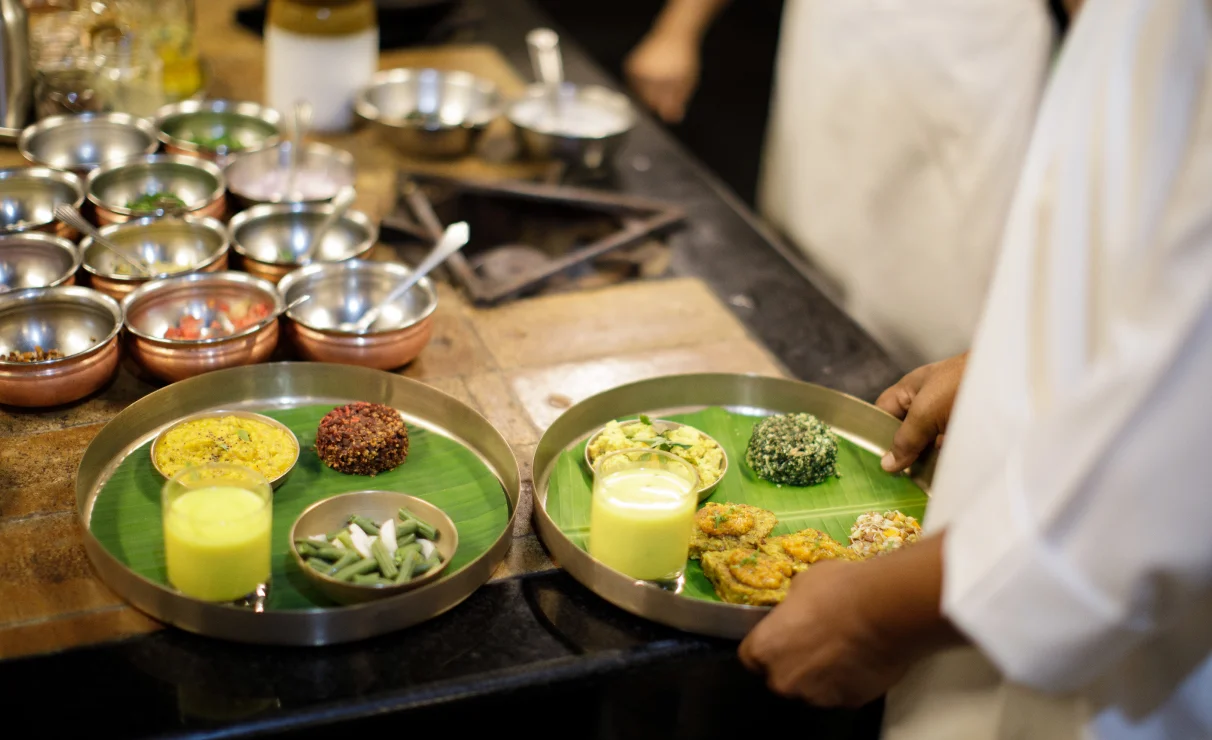
Ahara, meaning food, is one of the most important aspects of life, and the most important part of the three pillars of life. The three pillars being Ahara (food), Nidra (sleep), and Brahmacharya (celibacy). These three pillars promote growth, strength, development, and the enhancement of Ojas or the vigour of the body.
Some of the major diseases that manifest in the body, as a result of psychological and lifestyle disorders, are caused by the wrong food. While wholesome food nourishes your body and mind, unwholesome food has the opposite effect. This is why a properly ingested diet, as per Ayurvedic principles, is important to keep your body, mind and sensory organs healthy.
So, how do we eat right?
The principles of dietetics and nutrition in the Ayurvedic system of medicine includes different classes of eating and drinking, information on wholesome and unwholesome diets, learning the discipline of eating, etc. This is called Ahara Vidhi Visheshayatana or the 8 principles of food. These are:
Prakruti (Constitution Of Food)
Some foods are heavy to digest while others are easy to digest. Ayurveda helps us distinguish between the two. For example, non-vegetarian food like meat and fish is more difficult to digest than vegetarian food. This has an impact on our systems.
Karana (Processing Of Food)
This relates to the processing or cooking of the food, and how fire modifies the properties of the food. There are good processing methods and bad processing methods. For example, newly harvested rice is a little more difficult to digest than older rice because older rice has been processed for longer. So, the time has an effect on the digestibility of rice. Another example is curd. Curd can cause blockages in your tissues, but the same curd when churned changes its properties and becomes buttermilk, which can clear blockages in your tissues. So, by changing the properties of food, we can alter the effects.
Samayoga (Combination Of Food)
This principle covers combining two different food types, combining food with water or fire, and changing the properties of the food through cleansing, churning, storage methods, and time. For example, if you take ghee and honey, which are both very pure in nature, but mix them together in equal proportions, the resultant food becomes difficult to digest and adversely affects metabolism. But if you mix them in different proportions, nothing happens. Another example is milk and fish, which should never be eaten together.
Raashi (Quantity Of Food)
To understand this principle, you need to know how digestion happens in the body. If you continue to eat after your stomach is full, there is no space left for digestion, and digestion will not occur as it usually does. So, what is the right quantity to eat? Ayurveda divides the stomach into four quadrants. We should ideally eat to fill half our stomach, another one-fourth of the capacity should be kept for water, and the last quarter should be kept empty. Unfortunately, nowadays, with the number of distractions around, our mind is not aware of the amount of food we eat. During a meal, we are preoccupied with TV or our mobiles, and we are not mindful of whether our stomach is full or not. So, it’s important to maintain a good connection with the food as we are consuming it.
Desha (Influence Of Locality On Food)
Ayurveda states that the region in which the ingredients are grown influences the food. It specifies that the food grown around you and which is readily available to you is the best food for you. For instance, if you travel to a region which has a colder climate, you will find that the people of that region use fewer spices because they enjoy stronger digestion and are capable of digesting whatever they eat. However, in warmer regions, people use more spices because they have lower metabolic fire levels and need more spices to increase metabolism and digestion.
Kala (Influence Of Season/Time On Food)
The seasons too have an impact on the food. The best practice is to eat food that’s in season. For instance, mangoes used to be consumed only in the summer because that is the season for mangoes. Now, mangoes are genetically modified to be available throughout the year. This goes against the natural order. It’s important to consume only seasonal produce during their natural breeding season.
Upayoga Samstha (Rules For Taking Food)
Ayurveda also helps us understand when the best time is to eat and when not to eat. For example, midnight snacking is never a good idea and should be avoided so that your body gets enough time to digest your food properly.
Upayokta Samstha (The One Who Consumes The Food)
The last principle covers mindful eating. You should be aware of how the food is being made, focus on the taste as you eat it, feel the consistency, enjoy the food, understand the benefits you are getting as you consume it, and more, to get the maximum benefits. You should have a connection with the food.
With an understanding of these eight principles, you will be able to maximise the benefits you get from your food and reduce the risk of developing diseases. At our NABH-accredited hospitals, we strictly follow these tenets of Ayurveda, with the chefs personalising your diet based on the doctor’s prescription, and sourcing fresh produce and herbs from our own organic gardens, and the neighbouring ones to make your meals and your medicines. This is the CGH Earth Ayurveda way.