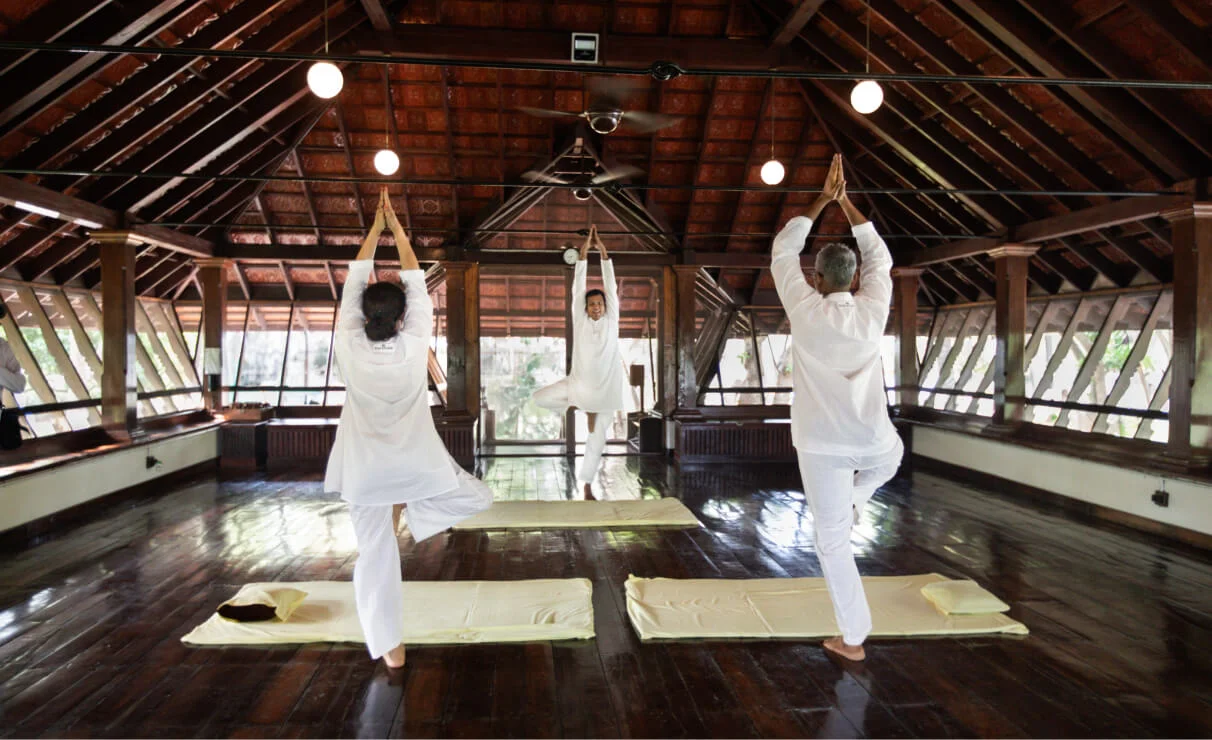
During the monsoon season-when maintaining health and immunity is paramount-the ancient practice of Hatha yoga offers a repertoire of asanas (postures) and pranayama (breathing exercises) that not only keep you physically active but also bolster your body’s defences against infections prevalent in these times.
Asanas to Stay Active and Strengthen the Body:
1. Surya Namaskar (Sun Salutation): A dynamic sequence that integrates several asanas, Surya Namaskar enhances blood circulation, stretches muscles, and stimulates vital organs. This holistic practice invigorates the body, preparing it to combat seasonal ailments.
2. Trikonasana (Triangle Pose): Known for its benefits in improving digestion and enhancing balance, Trikonasana also strengthens the legs and opens up the chest, promoting respiratory health—a crucial factor during the monsoon.
3. Bhujangasana (Cobra Pose): This pose not only improves the flexibility of the spine but also expands the chest, enhancing lung capacity and respiratory efficiency. It is particularly beneficial for maintaining healthy lung function.
4. Adho Mukha Svanasana (Downward Facing Dog Pose): A cornerstone pose in yoga, Adho Mukha Svanasana increases blood circulation, strengthens the arms and legs, and revitalises the entire body—a perfect antidote to the lethargy that can accompany the rainy season.
5. Shavasana (Corpse Pose): Often underestimated, Shavasana induces deep relaxation, calms the mind, and reduces stress levels. A relaxed mind supports a robust immune response, aiding in overall well-being.
Pranayama for Respiratory Health and Immunity Boost:
1. Kapalabhati: Known as the cleansing breath, Kapalabhati purifies the respiratory system, clears the nasal passages, and enhances lung capacity. Regular practise can fortify the body against respiratory infections.
2. Bhastrika: This rapid breath exercise increases oxygen supply to the body, boosting metabolism and promoting detoxification—a vital process during the monsoon to flush out toxins and maintain internal balance.
3. Anulom Vilom (Alternate Nostril Breathing): By balancing the flow of prana (energy) in the body, Anulom Vilom calms the mind, reduces stress, and improves lung function—a key component in strengthening immunity.
Hatha yoga’s holistic approach extends beyond physical exercise and breathing techniques. It nurtures a harmonious balance between body, mind, and spirit, thereby fortifying the immune system naturally. By reducing stress levels, enhancing circulation, and improving respiratory function, yoga equips the body to fend off infections and illnesses effectively.
Incorporating these Hatha yoga practices into your daily routine not only keeps you active and energised during the monsoon but also empowers your body’s innate ability to stay resilient against seasonal challenges. Whether you’re a seasoned practitioner or new to yoga, these time-honoured techniques offer a comprehensive approach to holistic health—a timely investment in your well-being.
Talk to our doctors at CGH Earth Ayurveda – Kalari Kovilakom & Kalari Rasayana – to know how Hatha yoga can help you during the monsoon, and get guidance from our yoga practitioners to ensure you follow the correct techniques.
Disclaimer
The sole purpose of this article is to provide information about Ayurveda. This information is not intended for use in the diagnosis, treatment, cure or prevention of any disease. If you have an acute or chronic health concern, please consult an Ayurveda doctor who can fully assess your needs and address them effectively.